
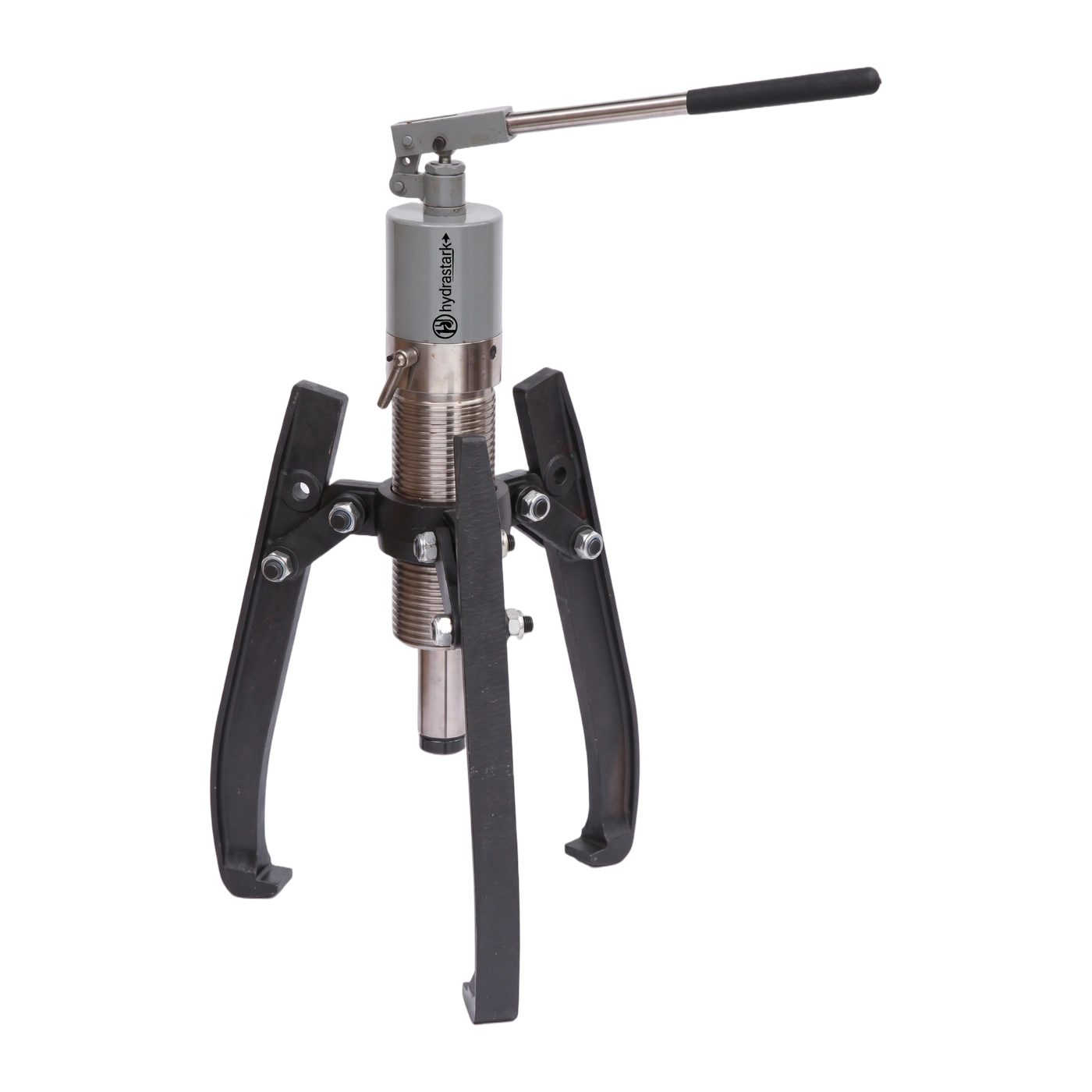
During refinery turnarounds, chemical plant overhauls, and offshore pipeline maintenance, gasket replacement represents a frequent bottleneck. Rusted stud bolts and frozen nuts often tempt field crews into dangerous hammer-and-chisel improvisations. Adopting engineered hydraulic flange spreaders and hydraulic nut splitters eliminates flange face gouging, cuts downtime by up to 60%, and safeguards pipeline integrity.
1. The Hidden Hazards of Traditional Hammer Wedges
Driving manual steel wedges with sledgehammers poses severe operational risks:
- Flange Face Gouging: Impacting hardened steel wedges against raised face (RF) or ring joint (RTJ) flanges damages machined gasket seating serrations, causing chronic fugitive emissions.
- Spark Hazards in Classified Zones: Hammer impacts create explosive spark risks in Zone 1 / Class 1 Div 1 environments containing residual volatile hydrocarbons.
- Uneven Flange Bending: Asymmetrical wedge driving twists pipe spools and misaligns bolt holes, complicating subsequent realignment.
2. Working Principle of Stepped Hydraulic Flange Spreaders (HFS-I Series)
Modern hydraulic flange spreaders operate on a frictionless, parallel wedge expansion mechanism:
- First-Step Insertion: The stepped spreader jaws require an access gap of just 6 mm (0.24 inches) between flange faces.
- Parallel Stepped Travel: As the 700 Bar hydraulic cylinder pushes the hardened wedge forward, the stepped interlocking jaws expand in pure parallel alignment. The entire flange face separates smoothly without tilting or binding.
- Integrated Safety Stepped Blocks: Supplementary safety stepped blocks are inserted into the gap, allowing complete withdrawal of the hydraulic tool while technicians safely extract the worn spiral wound gasket.
3. Removing Seized Studs Safely: The Hydraulic Nut Splitter Advantage
When studs are corroded by hydrogen sulfide or marine salt spray, torch cutting introduces extreme fire hazards and inevitably scorches the flange surface. The Hydraulic Nut Splitter (HNS Series) offers a clean, cold-cutting alternative:
- High-Strength Hardened Chisel: Precision-ground wedge blade made from vacuum heat-treated tool steel cleanly cleaves the nut parallel to the stud axis.
- Zero Stud Thread Damage: The geometry is calibrated to fracture the nut geometry before the chisel contacts the underlying male stud threads.
- Spark-Free Cold Operation: Cuts heavy hex nuts up to Grade 8 and 2H without flame, vibration, or impact stress.
Heavy-Duty Pipeline Flange Tooling
Upgrade your turnaround tooling kit with HydraStark 700 Bar flange maintenance solutions: