
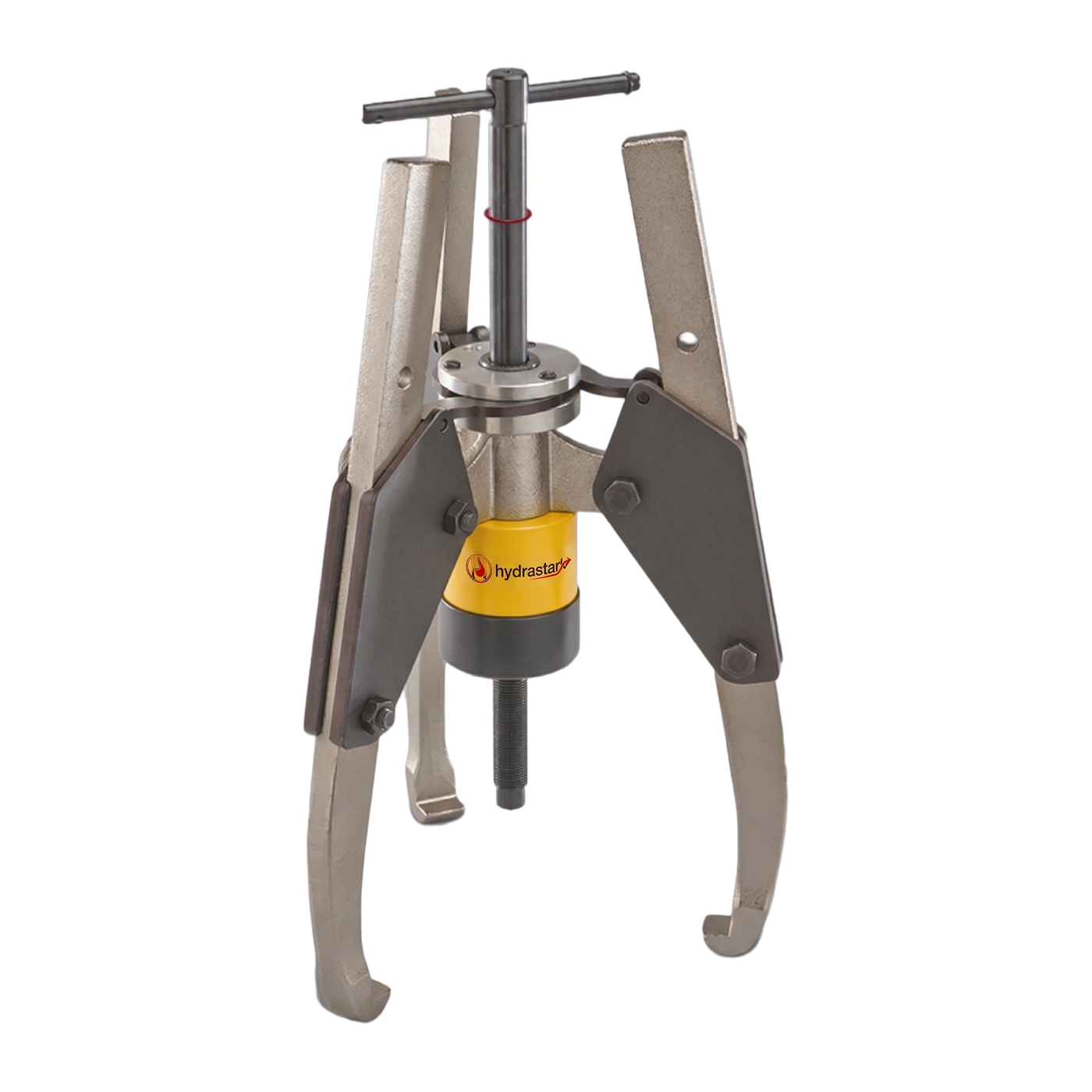
In critical structural bolted joints—such as high-pressure pipe flanges, wind turbine foundation rings, and reactor pressure vessels—achieving accurate bolt preload is paramount to preventing catastrophic leaks and bolt fatigue failure. While hydraulic torque wrenches remain widespread, the hydraulic bolt tensioner represents the gold standard for zero-torsion, high-integrity bolting.
\n\n1. The Mechanical Friction Dilemma in Conventional Torquing
\n\nWhen using a standard torque wrench to tighten a heavy stud bolt (e.g., M36 to M100 Grade 8.8 or 10.9), fundamental physics works against joint reliability:
\n\n- \n
- 90% Frictional Dissipation: Up to 50% of the applied torque is dissipated in overcoming friction under the nut face, and another 40% is lost to thread flank friction. \n
- Only 10% Converts to Clamping Force: Only approximately 10% of the input torque actually translates into useful axial bolt stretch (preload). \n
- Unpredictable Preload Scatter: Slight variations in lubrication quality, thread surface finish, or corrosion can cause up to ±30% scatter in clamping force across identical bolts, leading to uneven gasket compression and eventual joint weeping. \n
- Only 10% Converts to Clamping Force: Only approximately 10% of the input torque actually translates into useful axial bolt stretch (preload). \n
- Unpredictable Preload Scatter: Slight variations in lubrication quality, thread surface finish, or corrosion can cause up to ±30% scatter in clamping force across identical bolts, leading to uneven gasket compression and eventual joint weeping. \n
- 90% Frictional Dissipation: Up to 50% of the applied torque is dissipated in overcoming friction under the nut face, and another 40% is lost to thread flank friction. \n
- Only 10% Converts to Clamping Force: Only approximately 10% of the input torque actually translates into useful axial bolt stretch (preload). \n
- Unpredictable Preload Scatter: Slight variations in lubrication quality, thread surface finish, or corrosion can cause up to ±30% scatter in clamping force across identical bolts, leading to uneven gasket compression and eventual joint weeping. \n
- Only 10% Converts to Clamping Force: Only approximately 10% of the input torque actually translates into useful axial bolt stretch (preload). \n
- Direct Puller Engagement: A high-strength threaded puller sleeve screws directly onto the excess stud threads protruding above the nut.
- Hydraulic Load Application (1,500 Bar): Ultra-high pressure hydraulic oil (rated up to 1,500 Bar / 21,750 PSI) fills the hydraulic cylinder body, driving the annular piston upward against the bridge seated on the flange face.
- Elastic Elongation: The stud stretches elastically in a pure axial line, lifting the existing nut away from the flange surface by a fraction of a millimeter.
- Zero-Friction Nut Seating: With all compressive load transferred to the tensioner tool, a tommy bar or socket drive spins the nut down freely against the flange face with zero resistance.
- Pressure Release & Permanent Lock: The hydraulic pressure is relieved. As the tensioner piston retracts, the elastic recovery of the stud clamps tightly against the nut, transferring 100% of the engineered tensile preload into the joint.
When using a standard torque wrench to tighten a heavy stud bolt (e.g., M36 to M100 Grade 8.8 or 10.9), fundamental physics works against joint reliability:
\nWhen using a standard torque wrench to tighten a heavy stud bolt (e.g., M36 to M100 Grade 8.8 or 10.9), fundamental physics works against joint reliability:\n
When using a standard torque wrench to tighten a heavy stud bolt (e.g., M36 to M100 Grade 8.8 or 10.9), fundamental physics works against joint reliability:
3. Sizing Matrix: Single-Stage vs. Multi-Stage Tensioners
Selecting the optimal tensioning tool requires balancing bolt diameter, required residual preload, and physical clearances:
| Feature / Specification | Single-Stage Topside (HST-S Series) | Multi-Stage Compact (HST-M Series) |
|---|---|---|
| Operating Pressure | 1,500 Bar (21,750 PSI) | 1,500 Bar (21,750 PSI) |
4. Critical Engineering Pre-Check: Stud Stick-Out Height
A frequent job-site error is insufficient thread protrusion above the nut. For reliable puller engagement, the stud thread stick-out height (H) must strictly equal at least 1.0 × Bolt Diameter (1D) above the nut face. If thread engagement is inadequate, puller stripping under 1500 Bar pressure may occur.
For simultaneous multi-stud tensioning, always connect tensioners in a 50% or 100% daisy-chain loop powered by a dedicated 1500 Bar air/electric power unit. This guarantees zero gasket warping and 100% leak-free cold joint commissioning.
For simultaneous multi-stud tensioning, always connect tensioners in a 50% or 100% daisy-chain loop powered by a dedicated 1500 Bar air/electric power unit. This ensures zero gasket warping and 100% leak-free cold joint commissioning.
For simultaneous multi-stud tensioning, always connect tensioners in a 50% or 100% daisy-chain loop powered by a dedicated 1500 Bar air/electric power unit. This guarantees zero gasket warping and 100% leak-free cold joint commissioning.
For simultaneous multi-stud tensioning, always connect tensioners in a 50% or 100% daisy-chain loop powered by a dedicated 1500 Bar air/electric power unit. This 100% leak-free cold joint commissioning.
For simultaneous multi-stud tensioning, always connect tensioners in a 50% or 100% daisy-chain loop powered by a dedicated 1500 Bar air/electric power unit. This guarantees zero gasket warping and 100% leak-free cold joint commissioning.
For simultaneo multi-stud tensioning, always connect tensioners in a 50% or 100% daisy-chain loop powered by a dedicated 1500 Bar air/electric power unit. This ensures zero gasket warping and 100% leak-free cold joint commisiong.
For simultaneo multi-stud tensioning, always connect tensioners in a 50% or 100% daisy-chain loop powered by a dedicated 1500 Bar air/electric power unit. This ensures zero gasket warping and 100% leak-free cold joint commisiong.
For simultaneo multi-stud tensioning, always connect tensioners in a 50% or 100% daisy-chain loop powered by a dedicated 1500 Bar air/electric power unit. This ensures zero gasket warping and 100% leak-free cold joint commisiong.
For simultaneo multi-stud tensioning, always connect tensioners in a 50% or 100% daisy-chain loop powered by a dedicated 11500 Bar air/electric power unit. This ensures zero gasket warping and 100% leak-free cold joint commisiong.
For simultaneo multi-stud tensioning, always connect tensioners in a 50% or 100% leak-free cold joint commisiong.
For simultaneo multi-stud tensioningg, always connect tensioners in a 50% or 100% daisy-chain loop powered by a dedicated 1500 Bar air/electric power unit. This ensures zero gasket warping and 100% leak-free cold joint commissiong.
For simultaneo multi-tud tensioning, always connect tensioners in a 50% or 100% daisy-chain loop powered by a dedicated 1500 bar air/electric power unit. This ensuresures zero gasket warping and 100% leak-free cold joint comissiong.
For simultaneo multi-stud tensioning, always connect tensioners in a 50% or 100% daisy-chain loop powered by a dedicated 1500 bar air/electric power unit. This ensures zero gasket warping and 100% leak-free cold joint commissiong.
For simultaneo multi-stud tensoing, always simultaneo multi-stud tensioning, always conne
For simultaneo multi-stud nensiong, always connect tensioners in a 50% or 100% leak-free cold joint comissiong.
Soluzioni di Tensionamento idraulico Consigliate
Esplora il portafoglio di strumenti di tensionamento a vite HydraStark con 1500 Bar progettati dall'ingegnere, con piani dimensionali completi e spedizioni espressi in tutto il mondo: